


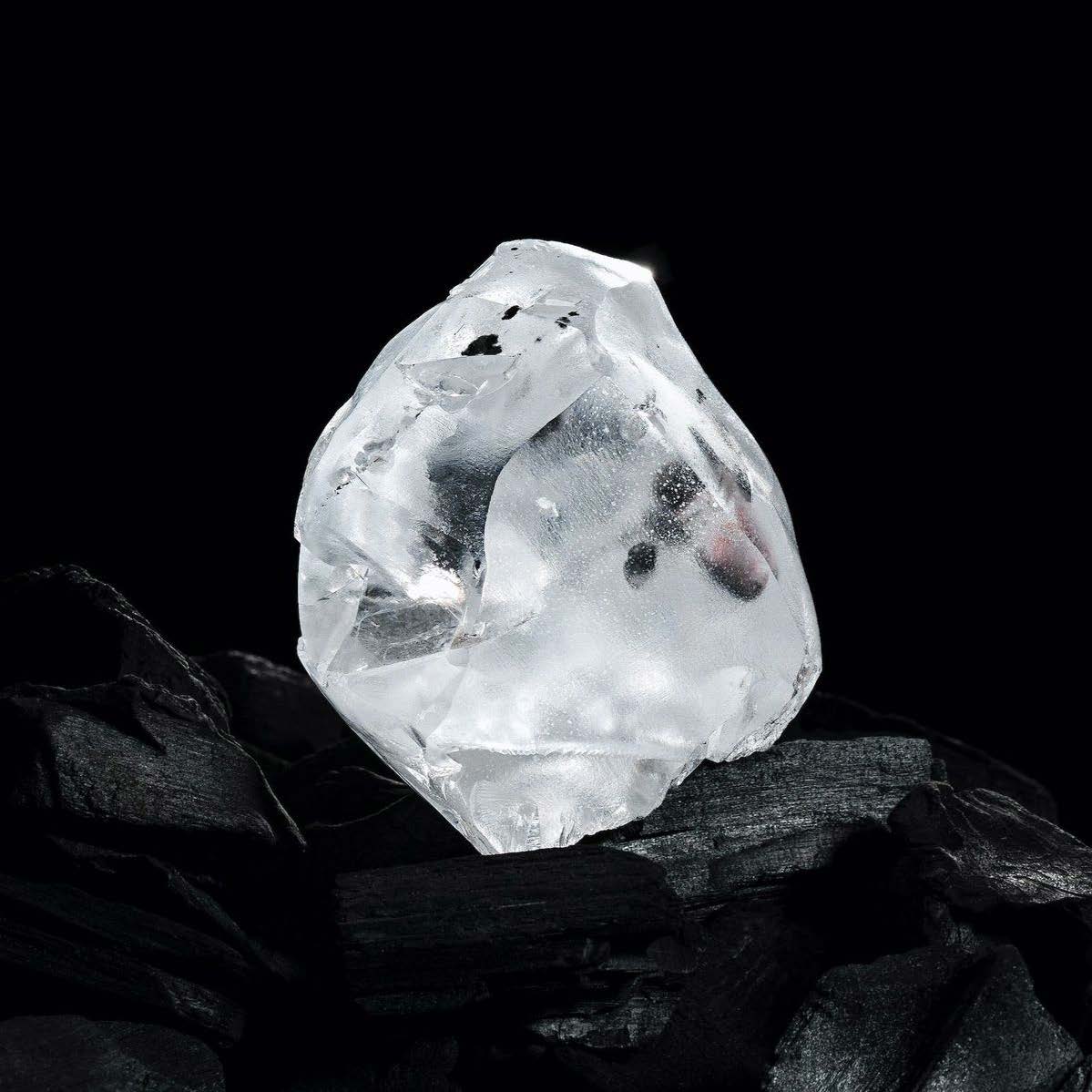
It is one of the most frequently asked questions of recent years: natural diamond or lab-grown diamond? Behind this question, however, lies a much deeper one. When you buy a diamond, are you simply buying an object, or are you buying a story? The answer each person gives to that question will inevitably shape their choice.
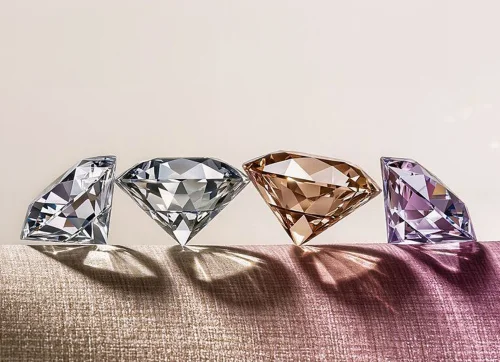
From a chemical and physical perspective, a natural diamond and a lab-grown diamond can appear remarkably similar. Both are made of crystallized carbon. Both possess exceptional hardness. Both can display extraordinary brilliance and transparency. But stopping there would be like saying that a modern print and an original painting are the same simply because they use the same colours. The reality is far more complex, and far more fascinating.
The most important difference cannot be seen. When someone looks at a natural diamond, they are looking at something whose journey began long before humankind existed. Long before cities. Long before civilizations. Long before recorded history. Natural diamonds were formed deep within the Earth, hundreds of kilometres beneath its surface, under conditions of pressure and temperature that are almost impossible to imagine. For millions, and often billions, of years they remained hidden inside the planet. Then extraordinary volcanic eruptions carried them towards the surface, where they waited for immense stretches of time before finally being discovered by human beings.
Think for a moment about what that truly means. The diamond that may one day be set into an engagement ring has already witnessed geological ages, climate changes, mass extinctions, the birth of continents, and the transformation of our planet. It has silently accompanied the history of the Earth. A lab-grown diamond, by contrast, is created inside a laboratory. It may take only a few weeks, sometimes a few months. It is the result of remarkable technology and extraordinary scientific achievement, both deserving of genuine respect. Yet its story begins and ends inside a machine. For some people, this difference means very little. For others, it means everything.
If diamonds were simply a matter of chemistry, this discussion would already be over. But a diamond has never been only about chemistry. No one gives a diamond because they need a piece of crystallized carbon. A diamond is given because it represents something: a feeling, a promise, an achievement, a memory, a symbol. And this is precisely where the natural diamond continues to hold extraordinary emotional power. When a man chooses a diamond for the woman he loves, he is not simply giving her a gemstone. He is giving her something that already existed millions of years before either of them, and that will most likely continue to exist for many generations after them. It is difficult to imagine a more powerful symbol.
Another aspect that is often overlooked is rarity. Natural diamonds are rare by definition. They cannot be manufactured on demand. They cannot be accelerated. They cannot simply be multiplied by increasing production capacity. Nature follows its own timetable, and nature's timetable cannot be negotiated. A lab-grown diamond, on the other hand, can theoretically be produced in unlimited quantities. Today, a single factory can produce far more diamonds than it could only a few years ago. Tomorrow, it will almost certainly produce even more. This does not mean that a lab-grown diamond has no value. It simply means that its rarity is fundamentally different. When something can be produced endlessly, the very concept of rarity changes, and with it, our perception of value inevitably changes as well.
Many people choose a lab-grown diamond because it costs less. That is perfectly understandable. However, it is important to understand why. Its lower price is not simply the result of greater commercial efficiency. It reflects the fact that it is an industrial product. And like most industrial products, its value tends to decrease as production increases. Over the past few years, the price of lab-grown diamonds has fallen dramatically. This is perfectly normal for technological products. Think of televisions, computers, or smartphones. As manufacturing becomes easier and more efficient, prices naturally decline. Natural diamonds follow completely different rules. Their availability depends not on factories, but on nature.
People often say that a lab-grown diamond is identical to a natural diamond. Perhaps that is not the most meaningful comparison. Perhaps the better questions are these: Is a natural rose identical to a perfectly crafted artificial one? Is a handwritten letter identical to a printed copy? Is an original painting identical to a flawless reproduction? From a technical perspective, the answers may be surprisingly close. Emotionally, however, they remain profoundly different, because human beings attach value not only to appearance, but also to the story behind the object.
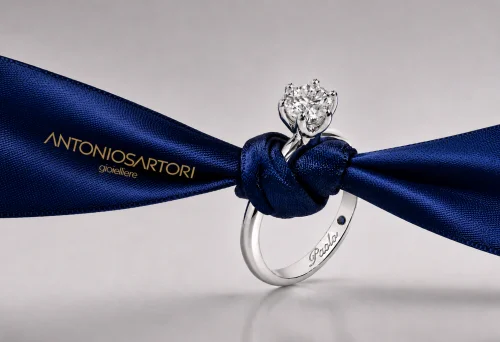
This becomes even more significant when we talk about engagement rings. An engagement ring is not a rational purchase. If it were, very few people would spend significant sums on a gemstone. An engagement ring is a symbol. It is the way one person chooses to represent a feeling. For this reason, many couples continue to prefer a natural diamond. Not because it is more brilliant. Not because it is harder. Not because it is more beautiful. But because its story perfectly reflects the message they wish to express: a genuine Love. Unique. Impossible to replicate. Created slowly. Destined to last. Just like the diamond that represents it.
There is another aspect that is rarely discussed. Natural diamonds often contain tiny internal characteristics, microscopic fingerprints left by nature itself. Invisible to the naked eye, these details tell the extraordinary story of the gemstone's journey. They should never be viewed as imperfections. They are nature's signature. They are what make every natural diamond different from every other. Each gemstone possesses its own identity, its own history, and its own uniqueness. And it is precisely that uniqueness which makes it so special.
It would be wrong to claim that there is one universally correct choice. Every individual has different priorities, different values, and different sensitivities. Some clients are completely satisfied with a lab-grown diamond. Others would never consider anything other than a natural one. The final decision always belongs to the person making the purchase. What truly matters is that the decision is an informed one. Not based solely on price. Not based on slogans. Not based on temporary trends. But on a genuine understanding of what is being purchased.
And perhaps the most important question comes at the very end. When a woman looks at her engagement ring twenty, thirty, or forty years from now, what will she see? Will she simply see a gemstone? Or will she see a story? Will she see an object produced by a machine? Or will she see a fragment of the Earth that came into existence millions of years before she did? Everyone will answer differently.
Personally, I continue to believe that the true fascination of a natural diamond lies precisely here. Not only in its beauty. Not only in its rarity. But in its extraordinary story. A story that began long before any of us. A story that no laboratory will ever be able to recreate. Technology can reproduce a crystal structure. It can imitate an appearance. It can even recreate certain physical properties. What it cannot create is time. And time may well be the most precious element contained within every natural diamond. Millions, even billions, of years contained within just a few millimetres. A fragment of eternity that nature took almost forever to create. That is why, even today, whenever I hold a natural diamond between my fingers, I do not simply see a gemstone. I see a story. And great stories, just like great Loves, can never be manufactured.

We and selected third parties use cookies or similar technologies for technical purposes and, with your consent,
also for other purposes as specified in the .
If you close this banner with a tick or click on "Decline", only technical cookies will be used. If you want to select the
cookies to be installed, click on 'Customise'. If you prefer, you can consent to the use of all cookies, including
cookies other than technical cookies, by clicking on "Accept all". You can change your choice at any time.