

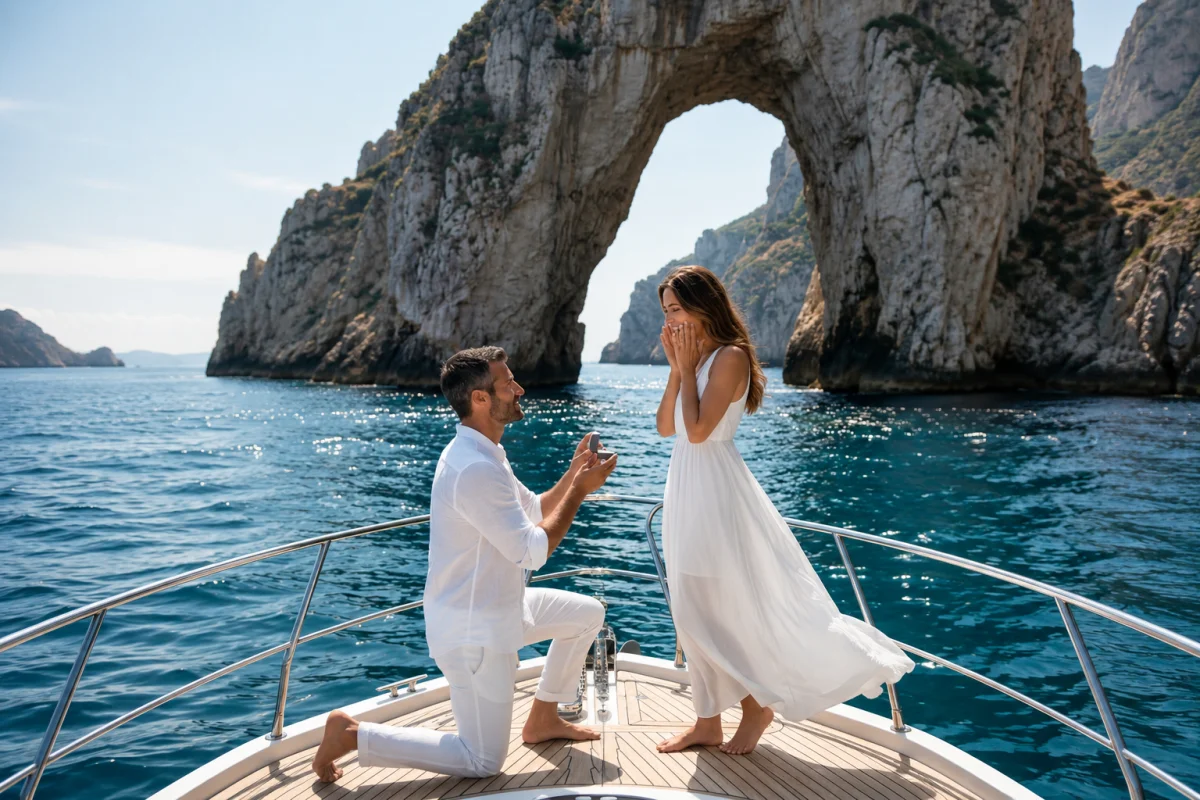
There are gestures that time simply cannot erase. They transcend centuries, outlive fashions, traditions, and even generations, while preserving their meaning intact. One of them is a man kneeling before the woman he loves to ask her to marry him. It is an image we all recognize, yet few have ever stopped to wonder why it exists. Why one knee? Why does this gesture still move millions of people around the world?
The answer is far more fascinating than most people imagine.
The origins of this tradition date back to the Middle Ages. Knights would kneel before their sovereign to swear loyalty, and before the lady they loved as a sign of respect, devotion, and protection. The gesture had nothing to do with submission. Quite the opposite. It was the highest expression of the value they placed on the person standing before them. It was a way of saying, "You matter so much to me that I willingly place myself in your hands."
As the centuries passed, countless customs changed. Clothing evolved, ceremonies transformed, celebrations became different, and even engagement rings took on new forms. Yet one knee on the ground remained.
Because, at its heart, it represents something that never goes out of style: respect.
When a man kneels to ask the woman he loves to marry him, he is not simply following a tradition. He is doing something far more profound. For a brief moment, he willingly gives up every position of strength. He makes himself completely vulnerable. He accepts the possibility of rejection. He entrusts his future to a single answer.
It is perhaps one of the very few moments in a man's life when he voluntarily chooses to reveal his vulnerability.
And it is precisely that vulnerability that makes the gesture so powerful.
We live in a society that constantly encourages us to project confidence, success, and control. Yet at the most important moment of his romantic life, a man chooses to do exactly the opposite. He kneels and asks a question, not a certainty.
Because marriage is never imposed.
It is asked for.
And the most important requests are made with humility.
At that moment, bank accounts, professional titles, and material possessions no longer matter. What matters is simply one person standing before another. On one side, a question. On the other, the freedom to answer. It is a simple gesture, yet it carries extraordinary meaning.
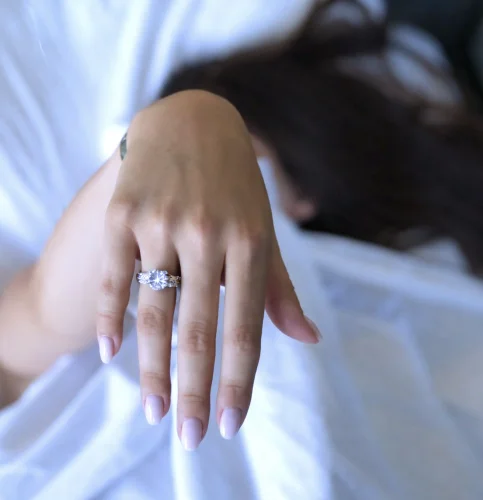
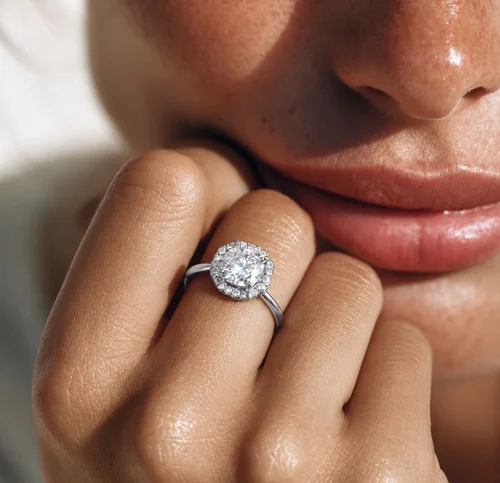
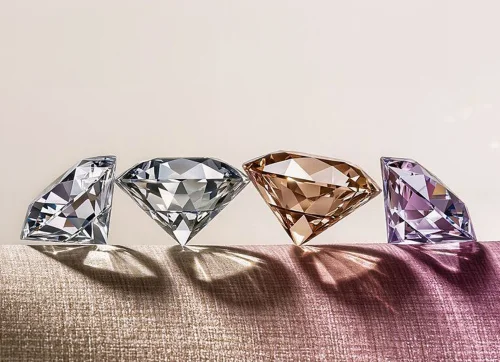
Perhaps that is also why the diamond has become the universal symbol of a marriage proposal. Many see it as nothing more than a precious gemstone, but its true value goes far beyond its rarity or brilliance. A diamond represents a promise meant to endure through time. A man kneeling represents the courage required to make that promise.
The diamond tells the story of what two people hope to build.
The gesture tells the story of what one is willing to risk to make it happen.
And that is where the magic of a marriage proposal truly begins. It is not the value of the ring that makes the moment unforgettable. It is the meaning the ring carries. A solitaire may be beautiful, flawless, and exceptionally rare, but without that moment of authenticity, it remains only an object.
The gesture is what gives it a soul.
Perhaps that is why photographs of marriage proposals continue to move us today. Not because they display a diamond, but because they capture an irreplaceable moment. A man choosing to set aside his pride. A woman recognizing the depth of that gesture. Two lives that, from that moment forward, may become one.
Times change. Fashions come and go. Even the ways people declare their love evolve. Yet one image continues to stand the test of time: a man on one knee, a small ring box in his hands, and one simple question.
Because some gestures are worth more than a thousand words.
And perhaps the true meaning of kneeling is not to lower oneself before the person you love.
It is to lift her up.
Because a man kneels only once.
Not before a woman.
But before the most important decision of his life.
We and selected third parties use cookies or similar technologies for technical purposes and, with your consent,
also for other purposes as specified in the .
If you close this banner with a tick or click on "Decline", only technical cookies will be used. If you want to select the
cookies to be installed, click on 'Customise'. If you prefer, you can consent to the use of all cookies, including
cookies other than technical cookies, by clicking on "Accept all". You can change your choice at any time.